Larynx microphones
In short: A larynx (throat) microphone sits on the neck and picks up the vibration of the body instead of the sound in the room. This gives a separate track for each singer even though everyone sings together.
The problem
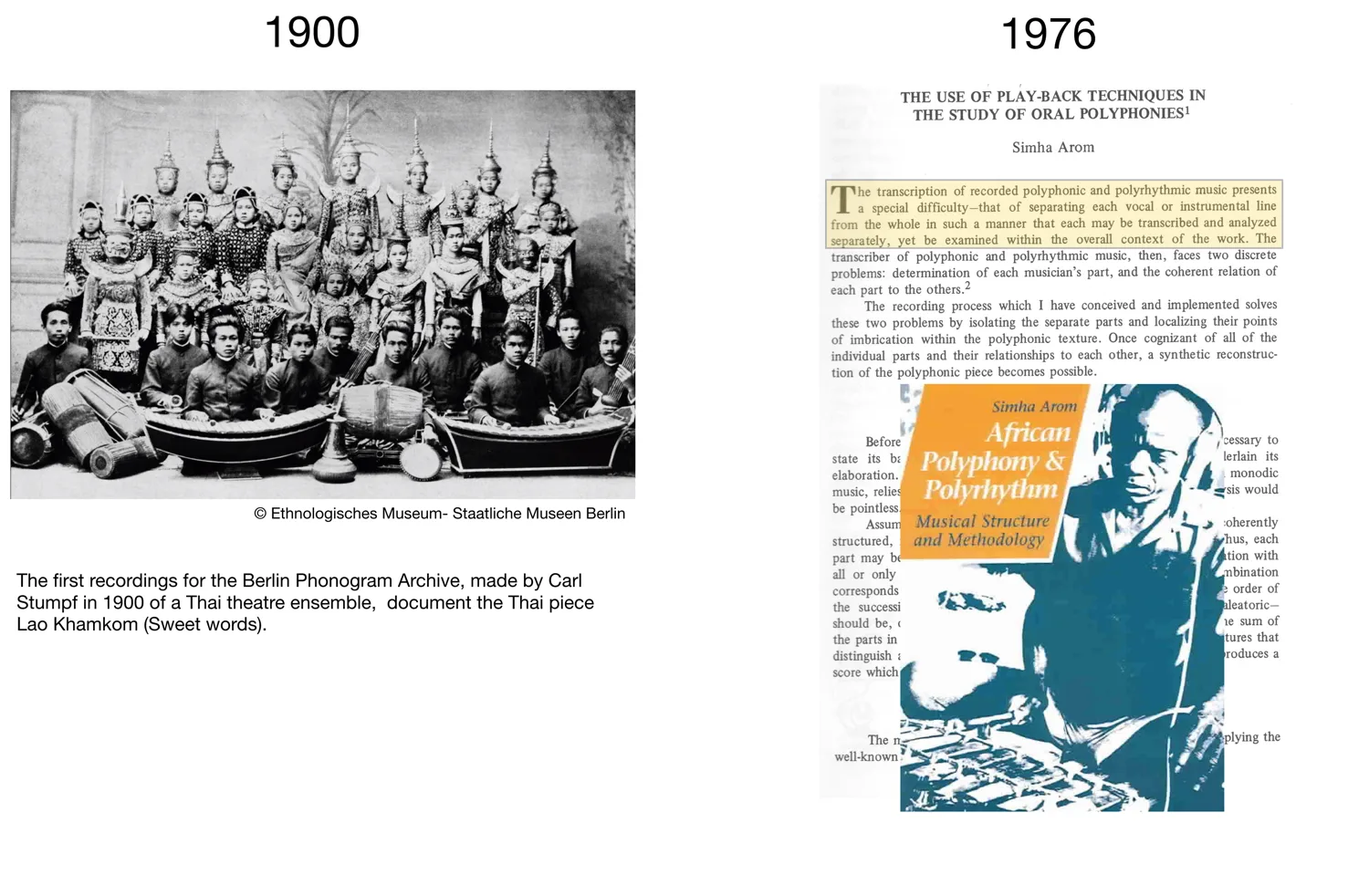
Anyone who wants to analyse polyphonic music has to separate the voices. In fieldwork that long remained largely unsolved. Musicians were recorded alone and in the ensemble, as early as Carl Stumpf’s first phonograph recordings around 1900. But a singer sounds different alone than in an ensemble. Later Simha Arom developed a two-tape-recorder technique that preserves the ensemble context. For singers in close physical contact who react to each other, however, singing to a playback still differs from singing together, especially in the intervals.
The idea
Frank Scherbaum came to Georgian polyphony in 2011 in a singing workshop with Frank Kane. As a seismologist he was intrigued by the idea of recording body vibrations. A first pilot study in Georgia followed in 2015. Its result: larynx microphones document each singer’s contribution largely undistorted while everyone sings together in their natural context.
In summer 2016 Frank Scherbaum and Nana Mzhavanadze spent three months in Svaneti recording a new research corpus of songs, prayers and laments, using conventional equipment and larynx microphones. It comprises more than a hundred songs and over a thousand audio tracks (headset, larynx, ambient and directional microphones), plus videos and interviews. This was the first larger-scale use of larynx microphones on an ethnomusicological field expedition.
What can be done with them
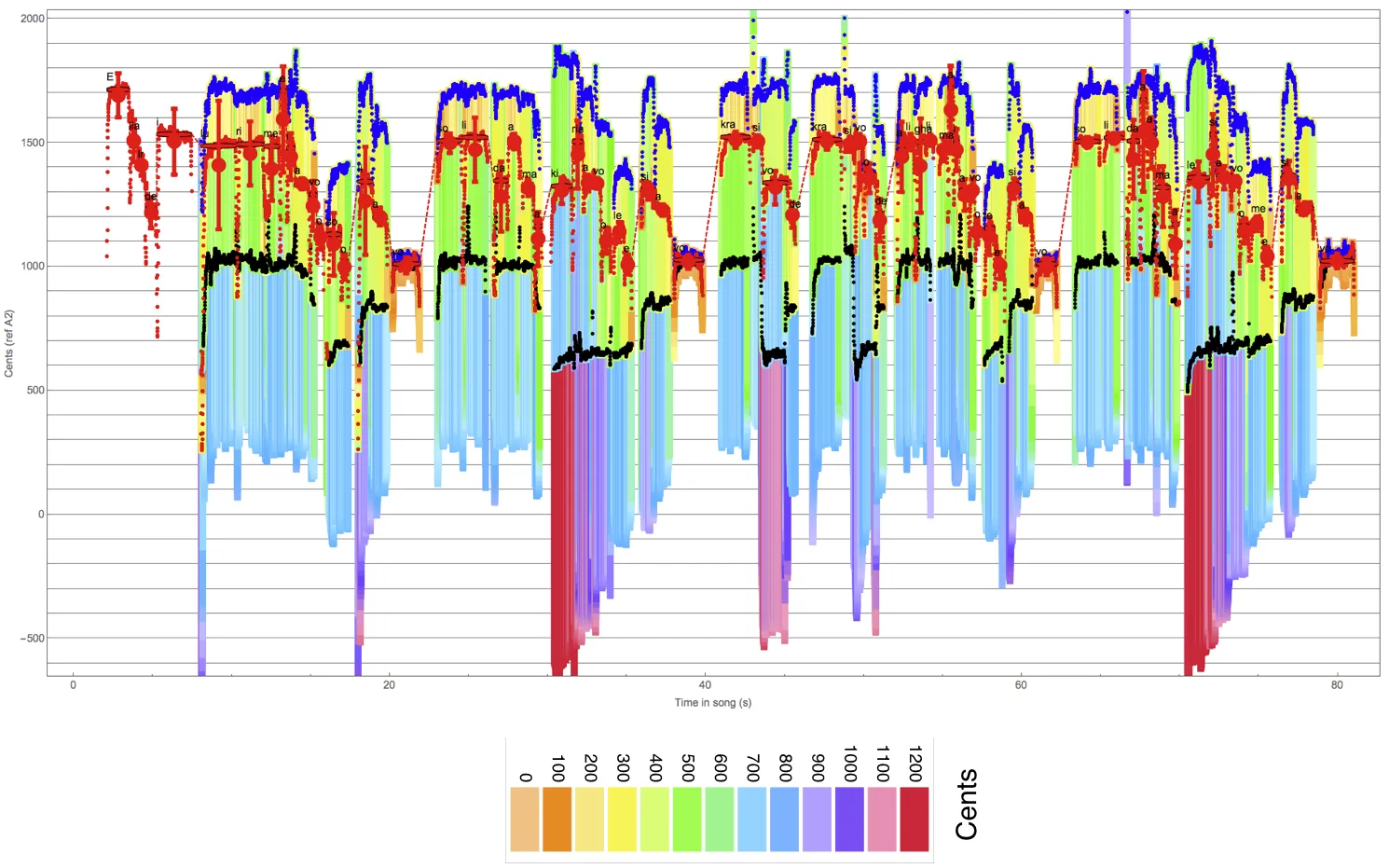
- Pitch trajectories of each voice, showing melody and harmony including fine details of tuning in a single picture, see harmonygrams.
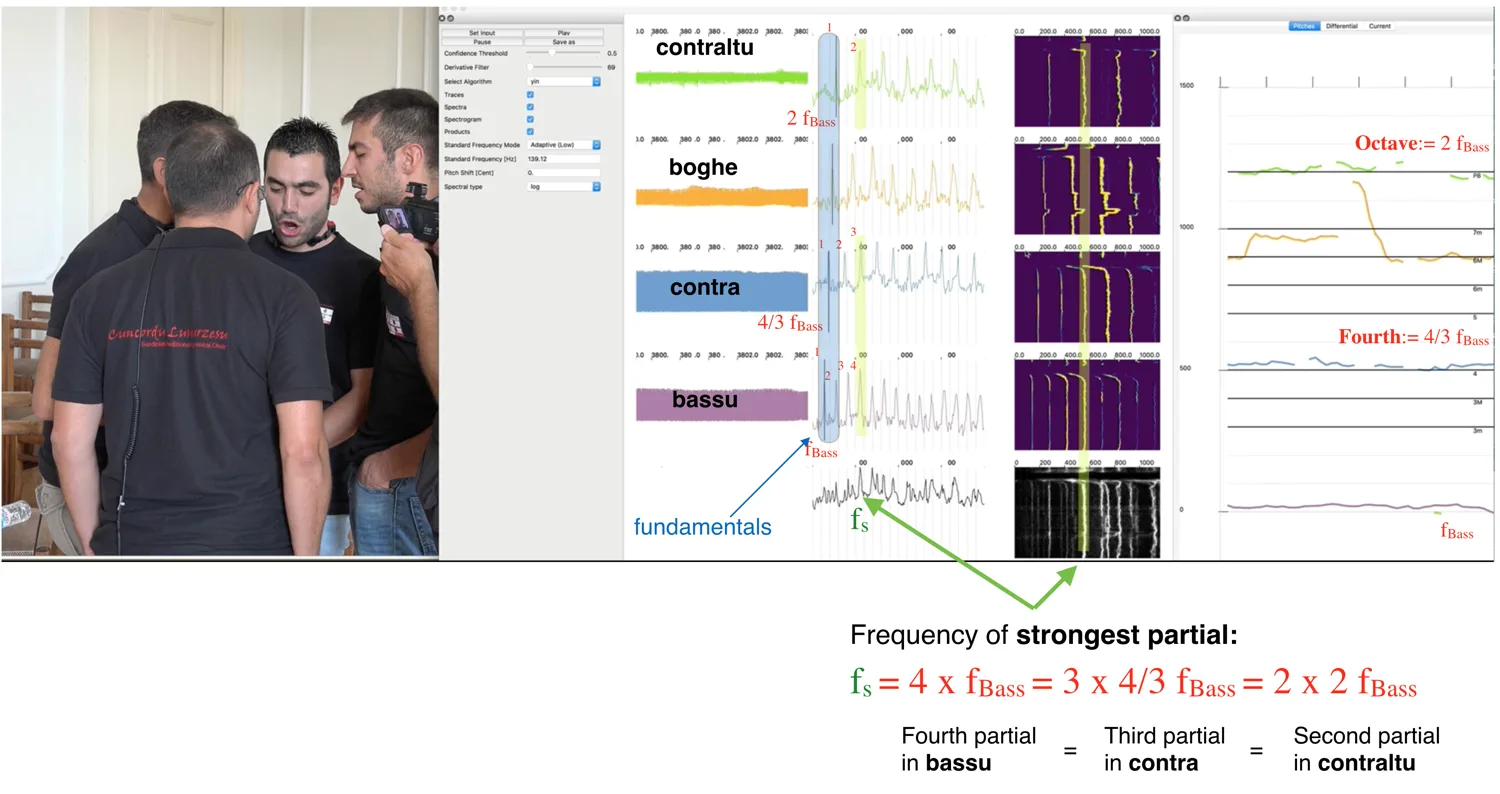
- Real-time analysis with the program Pytch, which evaluates multichannel recordings simultaneously (waveform, spectrum, fundamentals and intervals between channels). A recording from the Tbilisi Conservatory (2016) shows how, in the Sardinian Quintina, the partials of three voices fuse. In this style four singers produce an apparent fifth voice. In 2018 in Tbilisi the Miserere was also recorded with larynx microphones with the group Concordu Lussurzesu.
- Larynx microphones have also been tried outside fieldwork, for example at the 2019 Dagstuhl seminar on melody and voice processing and in Susanne Rosenberg’s FolkSongLab.
Further reading
A selection of recordings is on the companion site for the ISMIR 2018 contribution Throat Microphones for Vocal Music Analysis. Technical notes on handling are available. For publications see Publications.