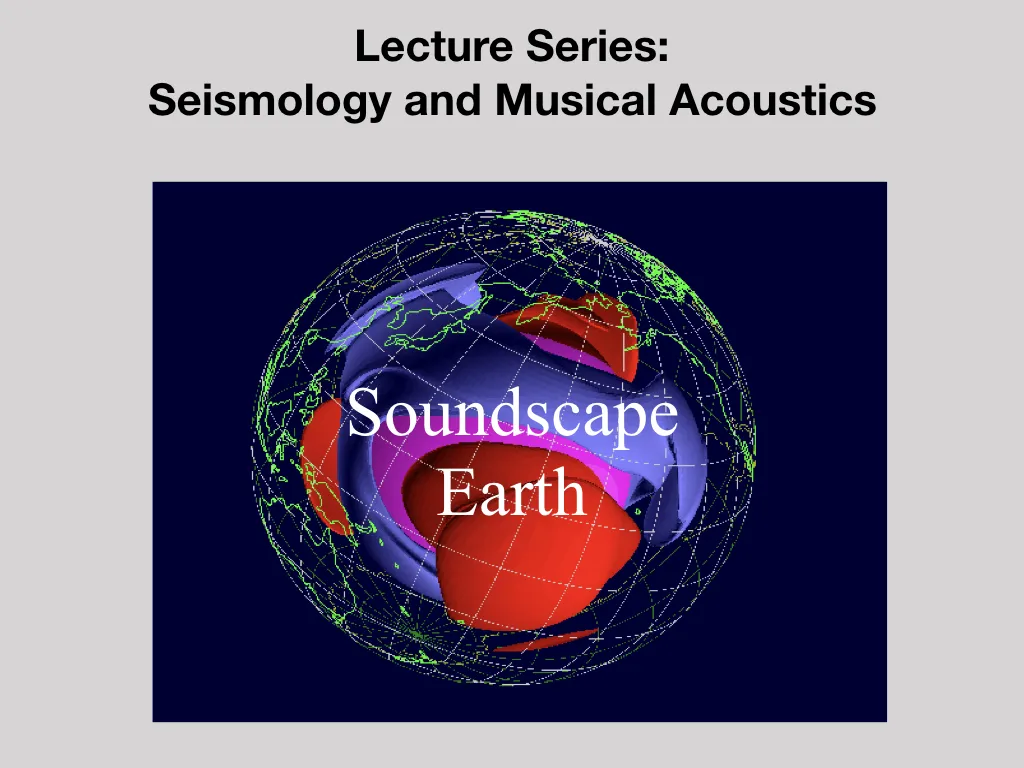
Soundscape Earth
Everything that vibrates sounds, even if we can’t hear it with our ears. The Earth is a vibrating structure and thus, if you like, a musical instrument.
Inner Earth: a seismosonic symphony
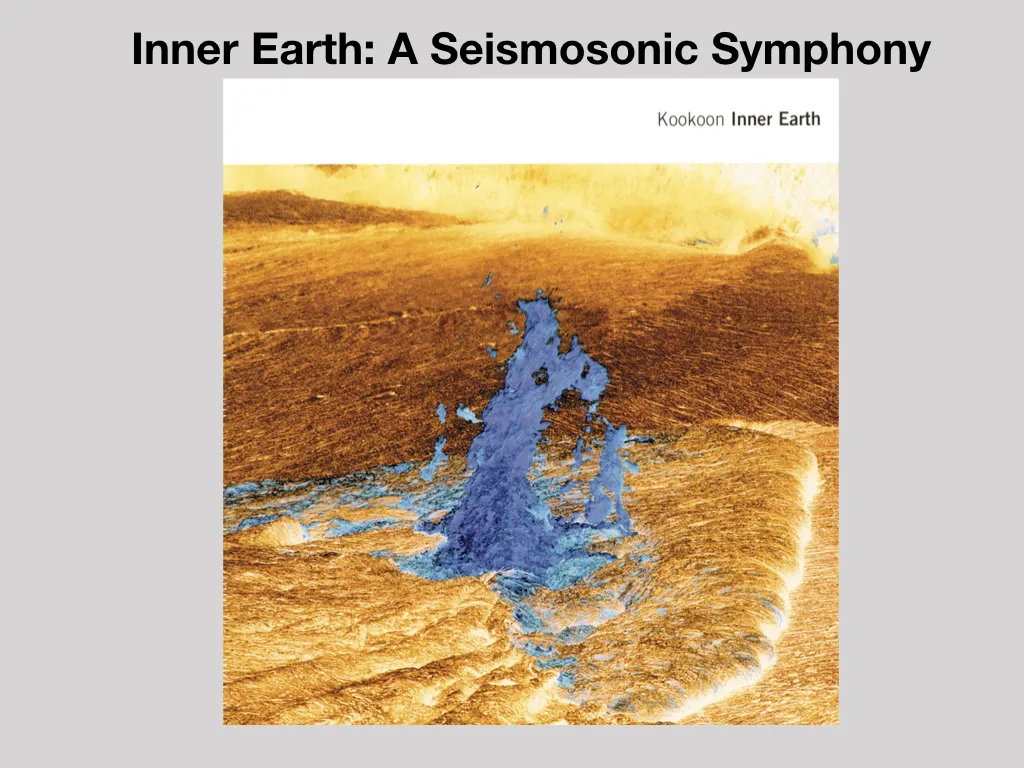
In 1999 the composer Wolfgang Loos and the seismologist Frank Scherbaum produced the CD Inner Earth (Traumton Records). Its sounds are drawn exclusively from seismic signals, in particular from volcanoes. The work received enthusiastic reviews in the national and international press and was chosen CD of the Month by the magazine Keyboard (11/99). There were numerous radio and television reports. In 2002 the musicologist and soundscaper Günter Olias presented his CD Variations on Inner Earth. In 2024 the release celebrated its 25th anniversary.
Making the Earth sound
The CD was not planned as a science project. Afterwards Frank Scherbaum wanted to convey the fascination of seismology and music to a mixed and above all young audience by making the Earth audible and visible as a body of sound.
The trick: vibrations and waves in the Earth, the daily bread of seismologists, are related to how well-known musical instruments produce sound, of which almost everyone has an idea. This makes complicated phenomena easy to understand:
- resonances in sediments
- how volcanic tremor arises
- the Earth’s natural oscillations after earthquakes
- the continuous natural “hum” excited in the atmosphere
As a by-product, basic concepts of musical acoustics become clear: timbre, sound spectrum, harmonic and percussive sound. For this, the sound production of guitar, flute and drum was illustrated acoustically and visually with self-made simulations, built into the lecture as films.
The lecture was first given in Germany in very different settings, for example at the Bundeskunsthalle Bonn, GEOMAR, the Max Planck Institute Dresden, the Urania Berlin, the Berlin-Adlershof drama school, the Leopoldina and at numerous schools, with audiences between about 30 and 500. Invitations to London (SECED), Grenoble and São Paulo followed. The response was enthusiastic everywhere. The topic interests people of every age.
To listen to and read further
- Soundscape Earth Lab: the lecture as an interactive online workshop with sounds and experiments (replaces the old CDF document)
- PDF version of the lecture
- Radio features about Inner Earth (in German), see below
Radio features to listen to
All features are in German.
SWR2, 22 December 2008
Bayern 2, 7 April 2010
WDR 3, 14 November 2010
Deutschlandfunk, 2012